

Sustainability Specification Series #2:
Leveraging Data for Selection, Documentation & Design Coordination
February 11, 2026
Part two of the Specifying Sustainability series will explore how to leverage product data and how to align them with your customer values and project goals.
Leveraging Data for Selection & Documentation
During the concept and schematic design phases, specifiers play a key role in aligning material and product decisions with the project’s performance goals. At this early stage, the design team is setting the foundation for outcomes related to sustainability like human health, climate health, and circularity — so the data & inputs have a major influence on what gets incorporated later in the process.
Commonly reviewed attributes include:
- VOC emissions
- Recycled content
- Chemical class avoidance
- Carbon footprint, or Global Warming Potential (GWP)
To make informed decisions, specifiers review these material attributes and connect them to project goals. These are then integrated throughout the design-build process into specifications, submittals, and BIM documentation.
Aligning with the Common Materials Framework (CMF)
The Common Materials Framework (CMF) is an emerging framework and language for product sustainability designed to clarify a complex sustainability certification landscape and a holistic approach to material impact.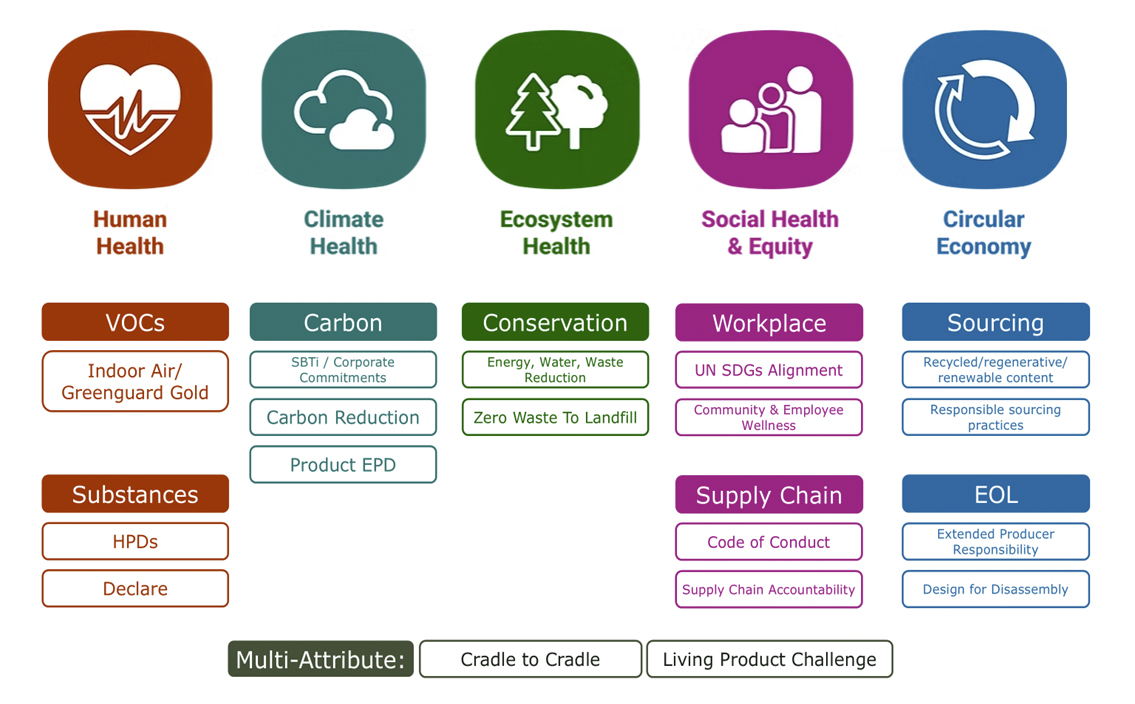
The CMF provides a consistent structure that organizes material sustainability data around core impact areas aligned with the AIA Materials Pledge. This allows any certification or dataset to be mapped into a common framework, making it easier to compare, communicate, and make decisions about product specification. Here’s what this framework enables:
- A clear market signal of the demand and importance of sustainable products, and confidence from manufacturers investing in sustainability
- Recycled content
- Fewer spreadsheets, duplicative requests, and wasted time documenting product
- A more holistic view of product impact
Streamlined Coordination & Risk Mitigation
Understanding the available data and search capabilities on Sustainability Data Sources and Platforms can help teams quickly connect the dots between requested data and where to find them. The bottom line: Ensuring documentation is available early in the specification process streamlines project steps later and ensures that a final product meets sustainability, client, and project goals.